
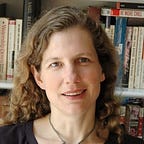

When Katharine Beals’ autistic son was young, she realise that he wasn’t acquiring language as other children were. It wasn’t happening naturally, so she set about deliberately teaching him how to communicate, word by word. From here, she developed a interest in autistic linguistics, as she calls it.
Fast forward to the present, her son is an adult and Katharine is a specialist in autism and language acquisition. And because she understands the process of language acquisition so well, when she heard about facilitated communication she knew it could not be possible. This just wasn’t how language and communication works.
In this fascinating conversation, Katharine tells us why she thinks that the neurodiversity community has not rejected facilitated communication despite the overwhelming evidence that it does not enable independent communication and can cause harm. She tells us about helping her son learn to communicate, and why understanding the intricacies of how autism can affect language acquisition is so important.
Katharine, along with Janyce Boynton (who we interviewed in S2 E10) contributes to a website dedicated to informing people of the harms of facilitated communication, FacilitatedCommunication.org.
Katharine’s own webpage
Link to the University of Pennsylvania’s (not Penn State as Dani had intially thought) Adversarial Collaboration Project.


